
The benefits of reading for younger people
While some argue it may have fallen out of fashion, the benefits of reading for children and young adults are robust. Reading can help improve cognitive ability, enhance language skills and build greater empathy over time.
Over the last twenty years reading for fun has declined by 40%, some experts say. This decline is due to a number of factors including; an increased digital culture and distractions, differences in lifestyle and time, structural and education factors among many others. Our technological world means many youngsters are exposed to social media via a smart device. This on its own is not too terrible, but a clever shift to short form content has wrecked attentions spans, which classically decrease as more time is spent online.
Cognitive and academic benefits: Reading requires sustained attention, which helps build concentration skills. It also stimulates the brain, improving memory and enhancing critical and analytical thinking. Frequent exposure can expand vocabulary and language skills as young people learn new words, sentence structure and improve their writing skills.
Reading is also an active task; whereas movies and TV can be passively consumed while also playing on a tablet, reading must be done in isolation. This alone helps increase attention span. These benefits are not isolated to particularly academic titles, and the same boosts can be found in individuals reading mostly fiction or leisure titles. This increase in knowledge and capabilities supports academic achievement.
Emotional and social benefits: Reading often allows you to step into the worldview of others. The act of reading about different characters and situations helps with recognizing, understanding, and naming the feelings of others. It also allows for exposure to new ideas, perspectives and worlds, therefore increasing their imagination. The exposure to different worldviews, and emotions also helps build emotional resilience which can improve social skills.
Nowadays, children often face an information overload, which can cause feelings of stress and anxiety. Reading can be a relaxing activity that helps to lower stress levels. It is also seen to provide benefit as a relaxing routine that can promote sleep quality. Children who begin reading for pleasure earlier in life tend to perform better at cognitive tests and have better mental health when they enter adolescence.
A very worthwhile activity
These benefits don’t go away as we age, but are particularly impactful if instilled in childhood. This can help foster a lifelong habit of learning and provide skills for personal growth for years to come. But how should you encourage more reading in your child’s routines:
Create a positive environment:
• Start early and make reading aloud a consistent part of your routine.
• Let your children see you reading and enjoying it to show that it is a pleasurable activity.
• Make it easy and accessible by designing a cozy space to read that is comfortable and easy to access their favourite books.
Make it engaging:
• Empower your child by letting them select their own books to give them ownership and motivation.
• Discuss the books and ask open-ended questions about the characters, plot and their predictions to make reading an interactive experience.
• Talk about how stories relate to their own experiences to make them more meaningful.
Be patient:
• Offer support if your child struggles with reading, be supportive and encouraging, the goal is to build a positive connotation to reading.
• Don’t be afraid to re-read old favourites, this can build confidence and enjoyment.
• Find small reading moments in everyday life, like reading a road sign or a recipe.
Add a social aspect:
• Make regular trips to the library for fun.
• Join or start a book club so children can discuss their reading with peers.
• Set aside just 10-20 minutes for the whole family to read together.
If things don’t work right away, don’t stress. The key to success is consistency and framing the experience positively. Setting too high expectations can lead to pressure on your kids, which can then further any resistance or struggle to make reading a pleasurable activity. Reading can open little eyes to big new worlds, and may be a last defence against the brain rot of the online universe permeating our everyday lives.
The joy of libraries
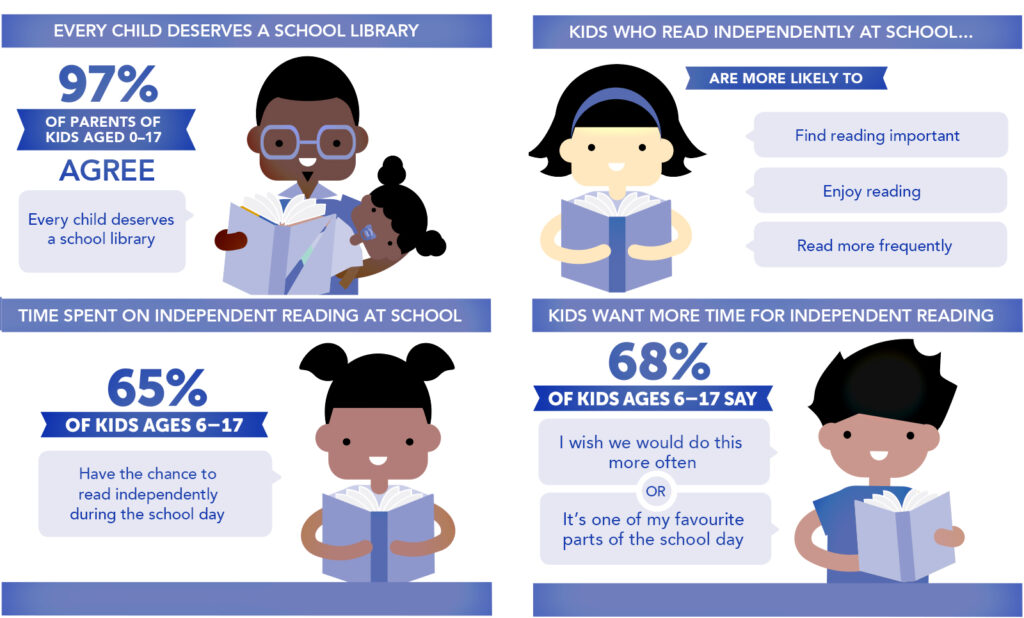
Many communities have a library close by that is free to use. In fact, research shows that are 642 public library systems with over 3,350 branches across Canada and a number of other local school and community spaces that have a variety of resources for reading enjoyment.
While fostering a love of frequent reading in children, adults can help the youngsters in their care to appreciate the benefits that joining the library can provide. Understanding library etiquette to ensure respectful and appropriate use of library resources helps children feel more comfortable when visiting the library and enhances the experience for everyone. This includes learning about appropriate noise levels, taking care of and returning books on time and in good condition and learning how to use shelf markers and call numbers and the Dewey Decimal System to find the location of books.
Children should be taught that walking, not running is ‘library friendly behaviour’ because libraries are quiet, calm places for all. Eating or drinking in the library is also not allowed to avoid damaging the books. Following the librarian’s instructions is crucial for a smooth library experience as is asking for help when needed and being able to wait patiently in line to check out books.
Life long learning
Reading, at any level, opens the door to a variety of life enriching experiences that increases everything from self-awareness and organizational skills to future job opportunities and the enjoyment of leisure activities. After all, as the saying goes…“you are what you read.”
Source: Kids & Family Reading Report™Canadian Edition
Illustrations: © 2017 Scholastic Inc. All Rights Reserved. Illustrations by Mariana Martins